
Sandustry Lava Guide: Density 200, Cinder and Heat
Pumps cannot move Lava. Cool it with Snow to create Scoria, break Scoria into portable Cinder, and ignite Cinder to restore Lava at the destination. In v0.5.6 Lava has density 200, destroys Fluxite, Redsoil and Strataform, and returns as Cinder when it meets a negative Thermal Buffer.
On this page
Convert Lava into portable Cinder
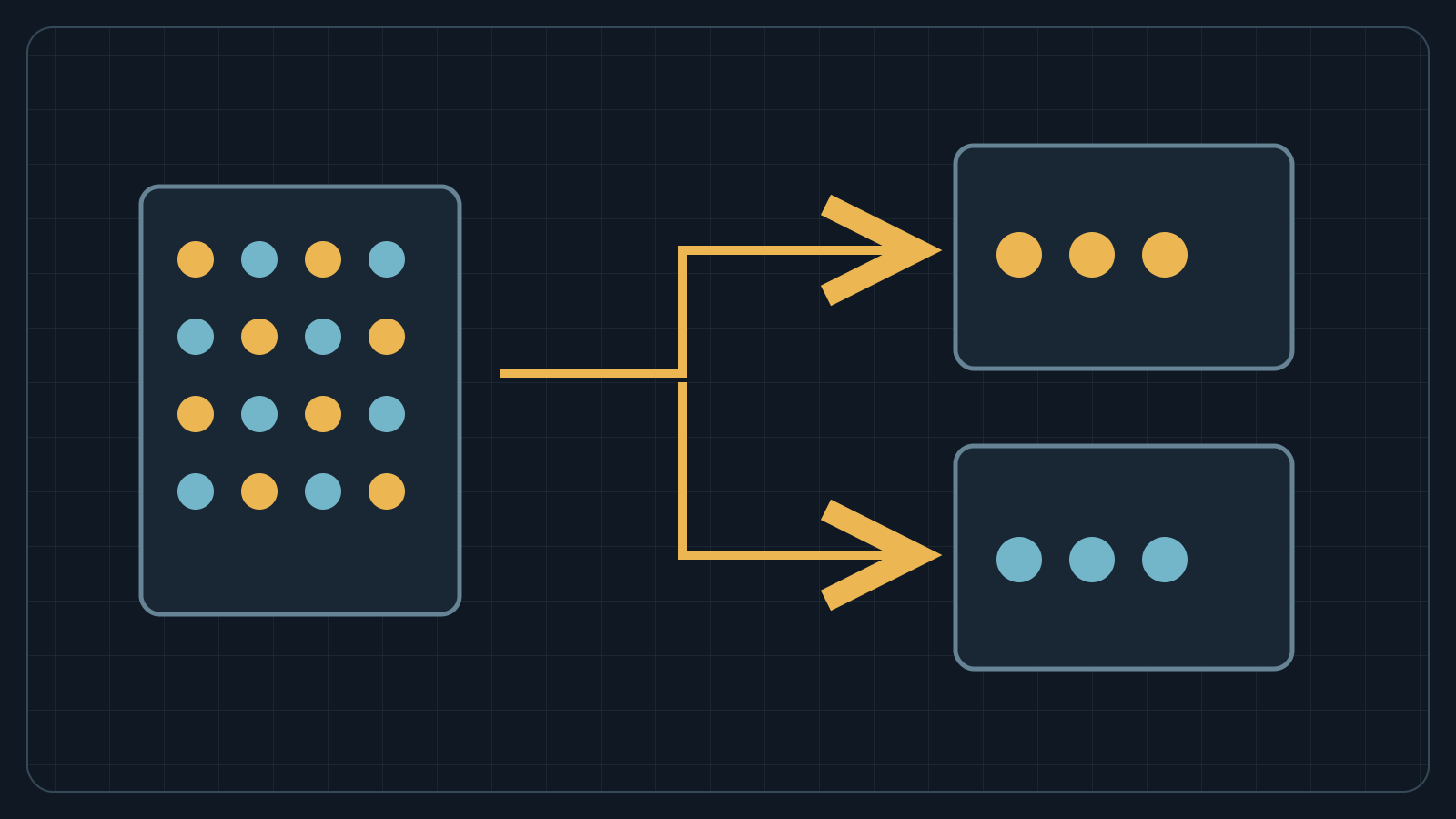
Standard Pumps cannot move Lava, so transport begins with a state change. Bring Snow into controlled contact with a small amount of Lava to create Scoria. Break the Scoria terrain to release Cinder, a solid that can be grabbed or moved with ordinary solid logistics. Keep the conversion chamber isolated from the destination so a mistake cannot release the whole source.
Label the recovery copy with v0.5.6 and the original chamber location. If the route crosses other solid logistics, test Cinder alone first and verify that Filters, corners, and collection cells do not retain part of the batch. Converting a destructive fluid into a solid is useful only when the solid destination remains observable and reversible.
Measure every boundary: Lava entering the cooling cell, Scoria formed, Cinder recovered, and Cinder delivered. A pile beside the Grabber or conveyor does not prove that the route accepts it. Commission the line with a limited sample, clear the output, and repeat after a save and reload before treating the route as dependable.
Do not try to solve failed pumping with more Pumps or a shared Pipe network. Lava remains outside ordinary fluid transport in the cited official material. Converting to a documented movable solid gives the route a visible inventory and a shutoff point, which are more useful than an inaccessible underground spill.
Restore Lava inside v0.5.6-safe containment
Direct Flamethrower heat melts Cinder back into Lava. Build and inspect the enclosure while the material is still solid, place only the amount needed for the first test, and ignite it after every boundary is closed. Keep Water, Flower, Residue, and other reactive materials away until the source behaves as expected.
Place a clearly visible shutoff before every conversion cell and never depend on the player's ability to grab Lava after a breach. The recoverable state is Cinder: stop, cool, break, and move the solid. Practice that recovery on a small source before bringing Lava beside a valuable production module.
When using Lava for Steam, measure Water delivered and Steam leaving without assuming the heat source is the limiting stage. A blocked shaft or full rain basin can move Water into an unintended cavity. Keep thermal generation separate from the route used to transport and restore the original Lava.
Update #3 raises Lava density to 200 and makes it destroy Fluxite, Redsoil, and Strataform terrain. Replace any of those materials used as a wall, floor, plug, or internal separator. The exterior may look intact while a destroyed internal cell redirects Lava into another line, so inspect contact points rather than only the room outline.
Density 200 can also alter a separator that depended on the earlier settling order. Pause old factories before loading the patch, empty shared junctions where possible, and test one small batch. Document the materials that remain stable in your current build instead of assuming that a familiar color or terrain type is safe.
Use heat and the negative Thermal Buffer loop
A contained Lava source can ignite Residue or Flower and contribute heat to thermal work. Water that reaches Lava can become Steam, changing both the fluid route and the gas space above it. Provide an escape or collection path for every documented output before allowing continuous input, and keep the player's service route outside the chamber.
Keep a physical gap between the Lava chamber and stored Fluxite, Redsoil, or Strataform. A temporary construction block made from one of those materials is still exposed to the new destruction rule. Check the chamber again after the longest normal run, because a slow internal change can take longer than the commissioning batch to reach a boundary.
In v0.5.6, a cold Thermal Buffer with negative temperature receives less heat from Lava and converts the Lava back into Cinder instead of fully consuming it. Give returned Cinder a dedicated exit. Watch the buffer temperature because the result depends on remaining below zero; a warming buffer may stop behaving like the first batch.
Treat heat balance and material throughput as separate limits. Record starting temperature, Lava introduced, Cinder returned, and ending temperature over the same interval. If Cinder accumulates at the output, fix that blockage before increasing cooling. If temperature crosses zero first, restore cold capacity before judging the material route.
Production chain
- ResourceLava
- ProcessSnow cooling
- ResourceScoria
- ProcessBreak terrain
- ResourceCinder
- ProcessFlamethrower heat
- ResourceContained Lava
Troubleshooting
- A Pump will not take in Lava
This is expected. Convert Lava through Scoria into Cinder and use solid transport.
- A v0.5.5 Lava chamber leaks after updating
Stop the source, replace Fluxite, Redsoil, or Strataform boundaries, and retest the density-200 flow with a limited batch.
Sources
Official references used for this field guide.