
Sandustry Shaker Guide: Wet Sand, Residue and Gold
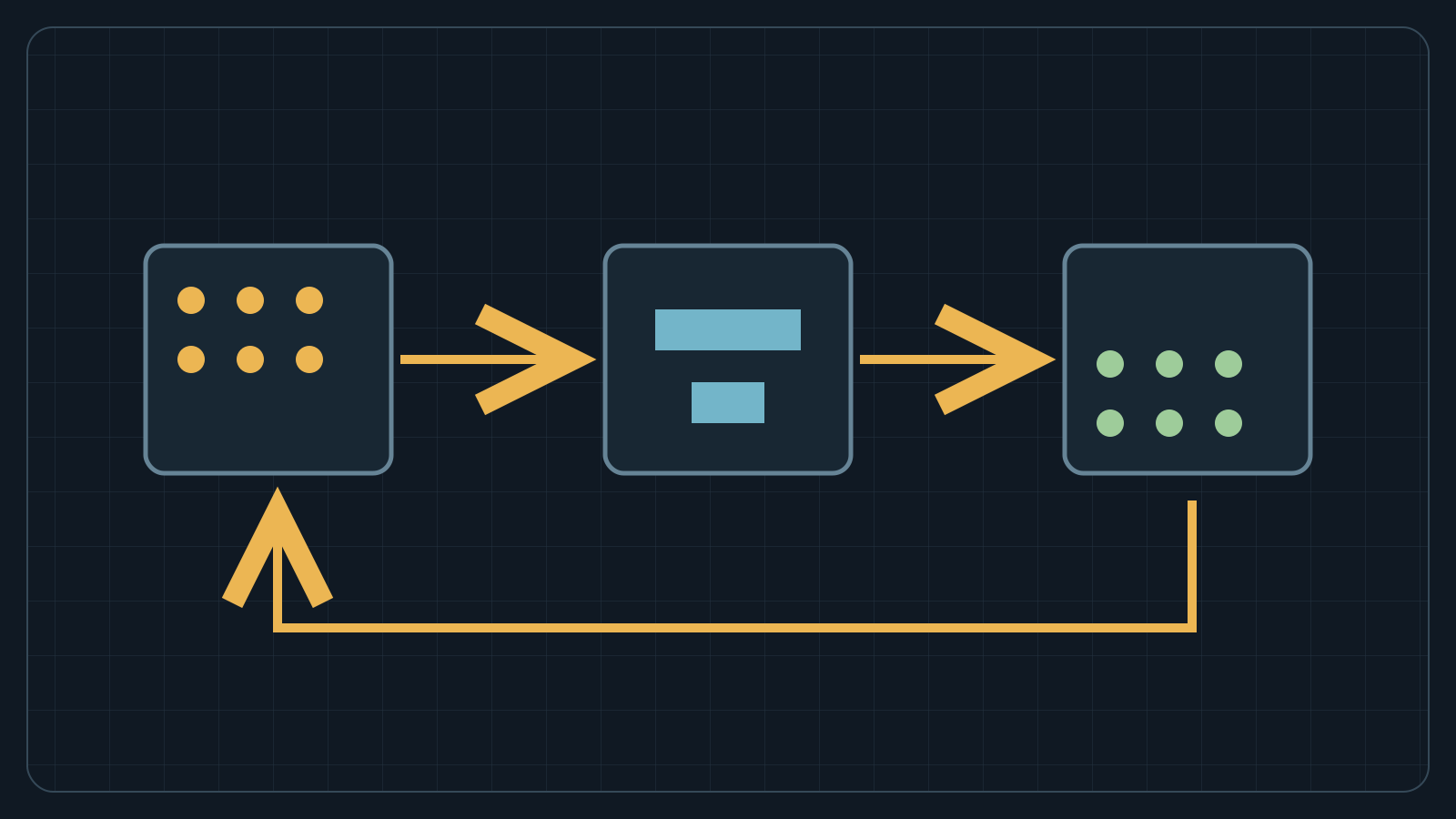
Feed Wet Sand into the Shaker. Each processed input produces Residue and has a 25 percent chance to produce Gold; Gold can pass through the machine, which makes the official diagonal layout useful for separating the streams.
On this page
Understand the machine's job before placing it
The Shaker is an early production building that turns Wet Sand into the materials needed for progression. Its output is asymmetric: Residue is the dependable stream, while Gold is a chance output. Plan storage and downstream capacity around both behaviors rather than treating every input as guaranteed Gold.
Gold can pass through the Shaker. The official wiki recommends a diagonal arrangement that uses this property to separate Gold from the main material flow. That geometry is part of the process, not decoration. Preserve access to both sides so a misplaced pixel can be removed without dismantling the feed.
Follow the documented input and output rules
The official Shaker page states that Wet Sand produces Residue every time and has a 25 percent chance to produce Gold. A chance per processed unit converges only over a large sample. Four inputs do not promise exactly one Gold, and a brief unlucky run does not establish a broken machine.
Wet Sand itself comes from contact between Sand and Water. The official Sand page documents one Sand plus one Water becoming two Wet Sand. Keep that wetting reaction upstream and provide a buffer so the Shaker receives a controlled solid input rather than an active mixture that can occupy unintended cells.
Build a serviceable layout
Begin with the official diagonal concept: give Wet Sand a clear route into the active area, let Gold use the pass-through path, and collect Residue in a separate pocket. Make each destination visible during commissioning. A hidden shared cavity makes chance output difficult to count and lets Residue conceal Gold.
Provide an overflow or shutoff before the input. Residue is produced consistently and can fill its destination before the Gold route looks busy. If the output backs into the Shaker, adding more Wet Sand worsens the evidence. Pause supply, clear both destinations, and reopen a small measured batch.
Diagnose the first failed boundary
If nothing processes, verify that the input is Wet Sand rather than dry Sand, Water, or a visually similar product. Inspect the final cell before the Shaker and the active cell inside it. Material beside a building is not proof that the documented input reached the processing position.
If Residue appears but Gold does not, count a larger sample before diagnosing failure. If Gold appears in the wrong stream, inspect the pass-through direction and diagonal geometry. If both outputs stop after a period, check the Residue destination first because its guaranteed flow usually fills faster.
Apply the v0.5.6 version notes
The v0.5.6 announcement does not publish a new Shaker conversion ratio, so the current official Shaker and Sand pages remain the factual basis for this guide. Record v0.5.6 on new rate measurements instead of combining them with demo or playtest observations.
Aura production later attracts Auralite globally toward the Aura Extractor. The official Aura tip recommends keeping relevant Shakers near the extractor radius. Treat that late-game Auralite arrangement as a separate module from the early Wet Sand Shaker line unless the route and material are explicitly documented.
Field facts
| Input | Wet Sand |
|---|---|
| Guaranteed output | Residue |
| Chance output | Gold, 25% per processed input |
| Useful property | Gold passes through the Shaker |
Troubleshooting
- The Shaker has material nearby but does not process.
Confirm that Wet Sand reaches the active input cell and that neither output pocket is full.
- A short batch produces no Gold.
The Gold result is probabilistic. Clear the output and test a substantially larger counted batch before reporting a fault.
- Gold mixes with Residue.
Recheck the pass-through direction and diagonal separation geometry, then test with a limited batch.
Frequently asked questions
What does the Shaker produce in Sandustry?
Wet Sand produces Residue every time and has a 25 percent chance to produce Gold.
Is one Gold guaranteed for every four Wet Sand?
No. Twenty-five percent is a chance for each processed input, so small batches can be above or below the average.
Why use a diagonal Shaker layout?
Gold can pass through the Shaker, and the diagonal layout uses that property to keep Gold and Residue on different routes.
How is Wet Sand made?
The official Sand page documents one Sand pixel plus one Water pixel producing two Wet Sand pixels.
Sources
Official references used for this field guide.