
Sandustry Planter Box Guide: Wet Seeds and Flowers
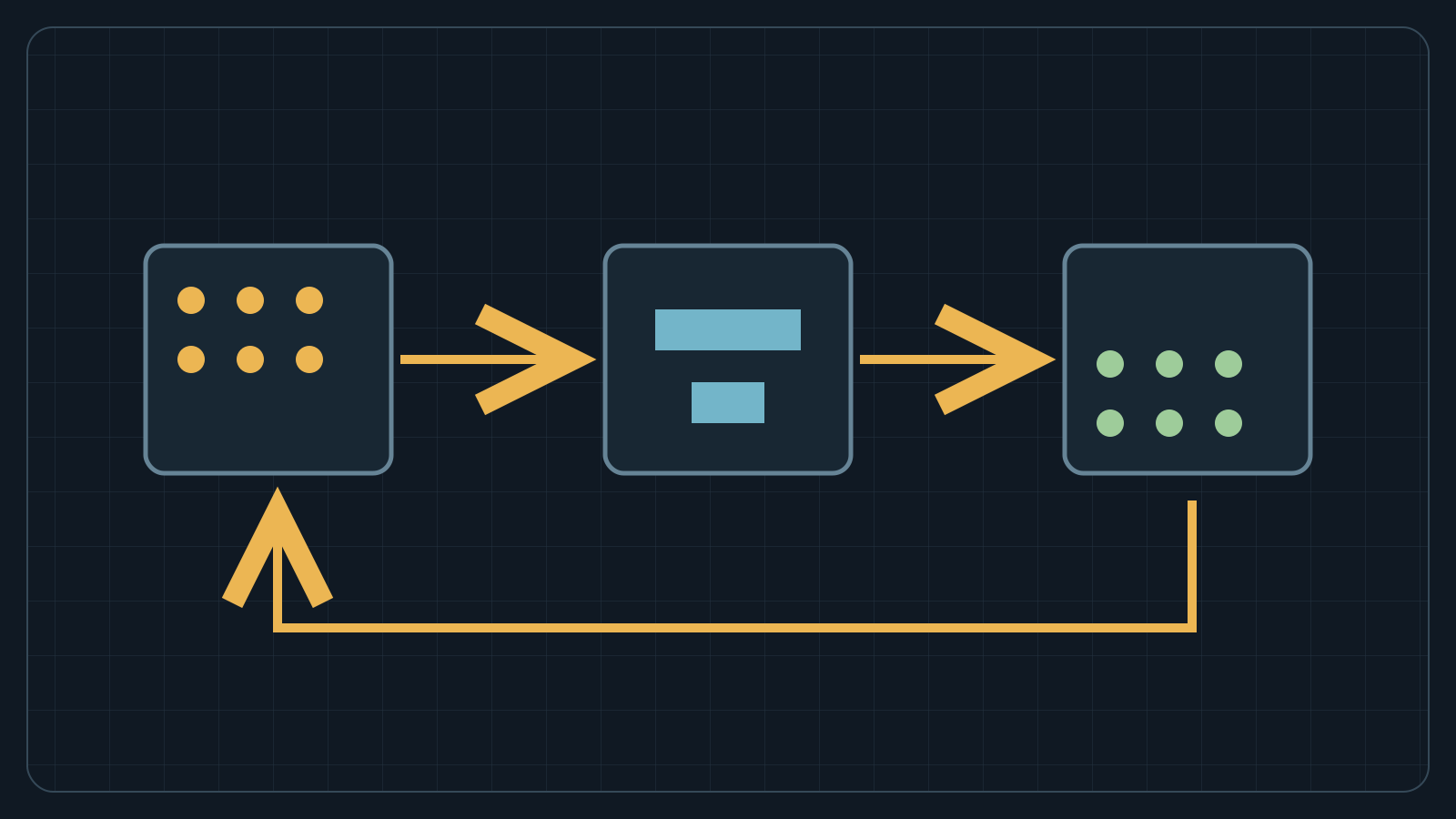
Place Wet Seeds into the Planter Box to grow Flowers. In v0.5.6, one Wet Seed produces exactly one Flower. Gold and Amethelis are the only documented solids that pass through, so collect them separately and keep excess Wet Seeds away from an uncontrolled Flower spread.
On this page
Understand the machine's job before placing it
The Planter Box is the controlled step in the Flower production chain. It accepts prepared Wet Seeds and creates Flowers, supporting the later Amethelis route. Its geometry also lets two valuable solids pass, so the output area should distinguish grown material from Gold or Amethelis moving through.
A reliable design begins upstream. Produce and store Wet Seeds deliberately, then feed a counted batch into an empty box. Keep the growth chamber separate from general seed storage. Update #3 clarifies that nearby Wet Seeds can be consumed by spreading Flowers, which can look like infinite growth while silently emptying a reserve.
Follow the documented input and output rules
The current official Planter Box page documents Wet Seed as the growth input and Flower as the result. It also states that Gold and Amethelis are the only solids that pass through. Other solids can occupy the structure or approach path, so keep a mixed waste stream away from the planter.
Update #3 changes the calamity and recovery behavior: one Wet Seed becomes exactly one Flower, shooting or digging seedlings can return Wet Seeds, and stuck seedlings eventually give up and produce Wet Seeds. These rules make recovery clearer but do not remove the need for controlled spacing and output clearance.
Build a serviceable layout
Use three boundaries: a Wet Seed buffer, the Planter Box growth area, and a Flower collection pocket. Add a separate pass-through lane for Gold or Amethelis if those materials share the module. Keep the Flower output far enough from reserve Wet Seeds that growth cannot consume inventory intended for another batch.
Provide player and tool access above or beside the growth area. A Flower or seedling stuck in an awkward cell should be recoverable without removing the whole box. Stop the Wet Seed feed before clearing so recovered seeds do not immediately re-enter the same blocked position.
Diagnose the first failed boundary
If no Flower appears, confirm that the input is Wet Seed, not Seed or another solid, and that the growth cell has space. Check whether pass-through Gold or Amethelis has filled the destination. Clear unrelated solids from the box before changing the feed.
If Wet Seeds vanish faster than expected, look for Flowers reaching nearby stored seeds. If a seedling is stuck, use the v0.5.6 recovery behavior and collect the returned Wet Seed. Test one seed after clearing to confirm the one-to-one result before reopening the batch.
Apply the v0.5.6 version notes
Version 0.5.6 establishes the exact one Wet Seed to one Flower result and provides recovery paths for seedlings. Any older guide that assumes one seed can directly create several Flowers should be read as an observation of nearby-seed consumption, not a free multiplication ratio.
The patch makes the Flower calamity easier, but it can still spread through accessible Wet Seeds. Separate reserves with geometry the Flower cannot reach, label the batch size, and compare input and output counts. This turns a visually chaotic process into an auditable production step.
Field facts
| Input | Wet Seed |
|---|---|
| v0.5.6 ratio | 1 Wet Seed → exactly 1 Flower |
| Pass-through solids | Gold and Amethelis |
| Recovery | Dig or shoot seedlings to recover Wet Seeds |
Troubleshooting
- A Flower consumes stored Wet Seeds.
Move the reserve outside the reachable growth area and feed only a counted batch.
- A seedling is stuck.
In v0.5.6, dig or shoot it, or allow it to give up, then collect the returned Wet Seed.
- The Planter Box is blocked.
Clear solids other than the documented Wet Seed input and Gold or Amethelis pass-through, then verify output space.
Frequently asked questions
What goes into a Sandustry Planter Box?
Wet Seeds are the documented growth input.
How many Flowers does one Wet Seed make in v0.5.6?
Exactly one Flower. Apparent continued spread consumes nearby Wet Seeds.
Which solids pass through the Planter Box?
The official page identifies Gold and Amethelis as the pass-through solids.
Can a stuck seedling be recovered?
Yes. In v0.5.6, shooting or digging it can produce a Wet Seed, and stuck seedlings eventually give up.
Sources
Official references used for this field guide.