
Sandustry Fluid Logistics: Pump, Pipe and Liquid Vent Guide
A fully submerged Pump can take in up to 16 liquid pixels per tick, while a Liquid Vent releases up to 4 per tick, so one Pump can support up to four unconstrained vents. Pipes form a shared network when they cross, and the system cannot transport Lava.
On this page
Understand the machine's job before placing it
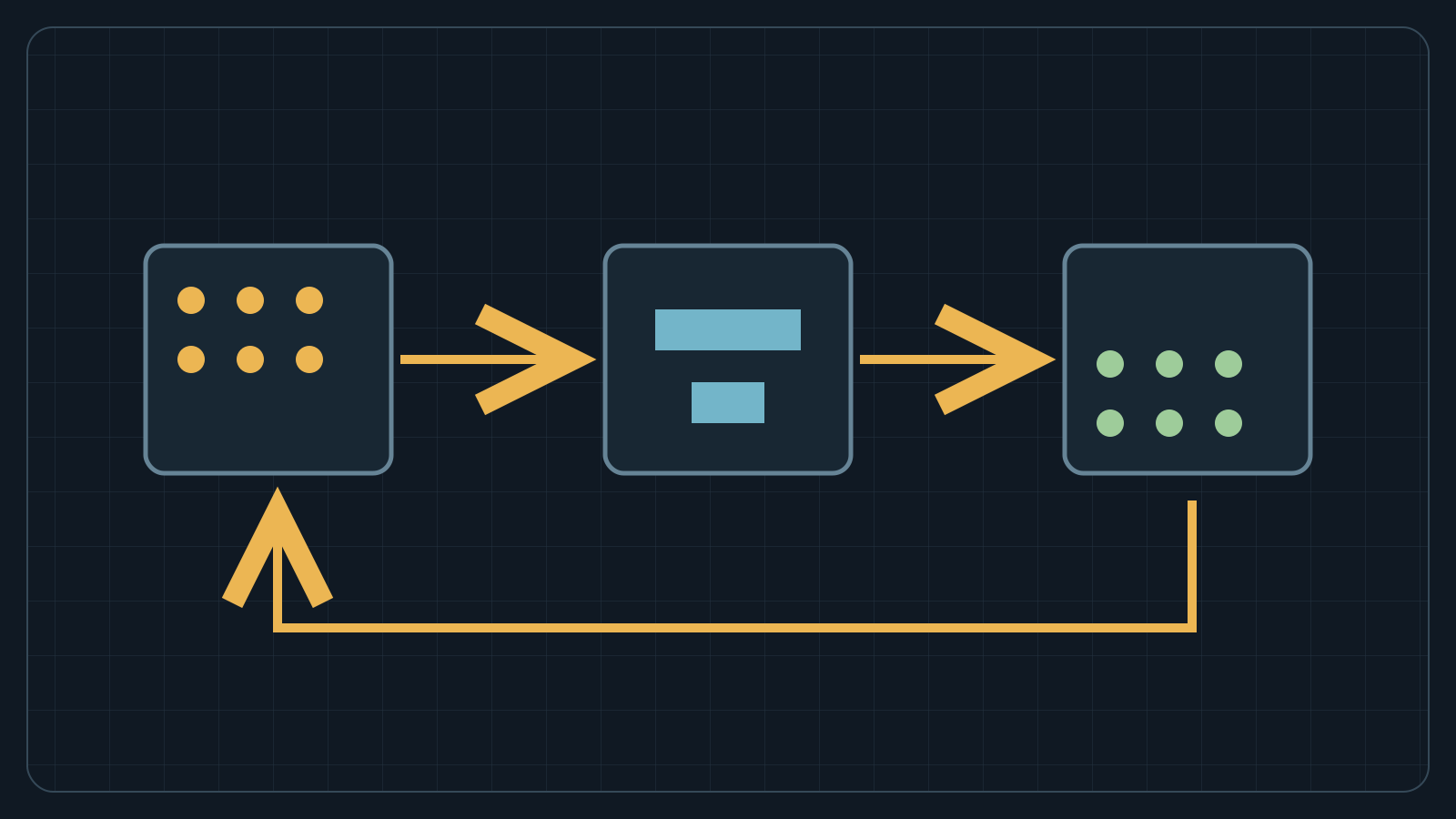
Fluid logistics is a three-part system: a Pump collects liquid, Pipes connect the network on their separate layer, and Liquid Vents release the stored mixture. Diagnose the parts in that order. A visible pipe line says nothing about whether the intake is submerged or the vent has room.
Crossing Pipes merge into one network, and all liquids in that network mix and distribute. Use physically separate networks when two fluids must remain distinct. A drawing that shows two colored lines crossing is not two isolated routes in the game's pipe layer.
Follow the documented input and output rules
The official Pump page states that every pixel can act as an intake and that a fully submerged Pump can move up to 16 pixels per tick. Solids inside the Pump block intake. Lava is not supported. These constraints make clean intake chambers and material screening essential.
The official Liquid Vent page documents a maximum of 4 pixels per tick and says output stops when the vent is about three-quarters submerged. Under otherwise clear conditions, one 16-per-tick Pump can feed four 4-per-tick vents. That is a capacity ceiling, not a guarantee when immersion, blockage, or network demand differs.
Build a serviceable layout
Build a clean source pocket around the Pump, route Pipes without crossing unrelated networks, and place Vents where discharged liquid can move away. Provide four vents only when the source can keep the Pump submerged and each destination remains below the stop level.
Add a shutoff or removable connection near the source and leave access to every vent. If the network carries more than one liquid, label that choice as intentional. Otherwise isolate networks before the crossing and test each with a small amount to confirm there is no hidden merge.
Diagnose the first failed boundary
When intake is slow, inspect Pump submersion and remove solids from its cells. When one vent stops, check local liquid depth before blaming the whole network. When every vent stops, compare source availability, Pipe continuity, and whether an unintended crossing distributed liquid elsewhere.
If the wrong liquid appears, trace all Pipe crossings and connected Pumps. The network mixes its contents; waiting will not separate them. Isolate the source, drain the contaminated network into a safe area, and rebuild distinct routes before restoring production.
Apply the v0.5.6 version notes
The cited official pages provide the current capacity and mixing rules used here. Update #3 changes Lava density and destruction but does not make Lava pumpable; the Pump page still says it cannot pump Lava. Keep Lava on a separate documented conversion or containment route.
Retest modded fluid networks on the v0.5.6 mods branch. New building-removal and material events can affect custom components, and a mod may introduce its own capacity or supported fluid. Preserve vanilla figures as the comparison rather than treating a modded result as a base-game update.
Field facts
| Pump maximum | Up to 16 liquid pixels per tick when fully submerged |
|---|---|
| Vent maximum | Up to 4 pixels per tick |
| Nominal fan-out | One Pump to four unconstrained Vents |
| Lava | Not pumpable |
| Pipe crossings | Merge into one mixing network |
Troubleshooting
- Pump intake drops.
Increase supported-liquid contact around the Pump and clear solids occupying its intake pixels.
- A Liquid Vent stops while the network is supplied.
Check whether the vent is about three-quarters submerged and clear its destination.
- Two liquids unexpectedly mix.
Find a Pipe crossing or shared connection, isolate the sources, drain the network, and rebuild separate routes.
Frequently asked questions
How fast is a Sandustry Pump?
A fully submerged Pump can take in up to 16 liquid pixels per tick.
How fast is a Liquid Vent?
The official page lists a maximum output of 4 pixels per tick.
How many vents can one Pump support?
Up to four at the documented maximums, provided the Pump remains submerged and every vent has clear output space.
Can Pumps move Lava?
No. The official Pump page says Lava cannot be pumped.
Do crossing Pipes stay separate?
No. Crossing Pipes join the same network, whose liquids mix and distribute.
Sources
Official references used for this field guide.