
Sandustry Conveyor Portal Guide: Cross Lines Without Mixing
Conveyor Portals let one production route cross another without combining the materials. The current official research table lists a 750 Gold unlock cost, and v0.5.6 fixes a case where portals became stuck. Test direction and output clearance with small labeled samples before connecting full supply.
On this page
Understand the machine's job before placing it
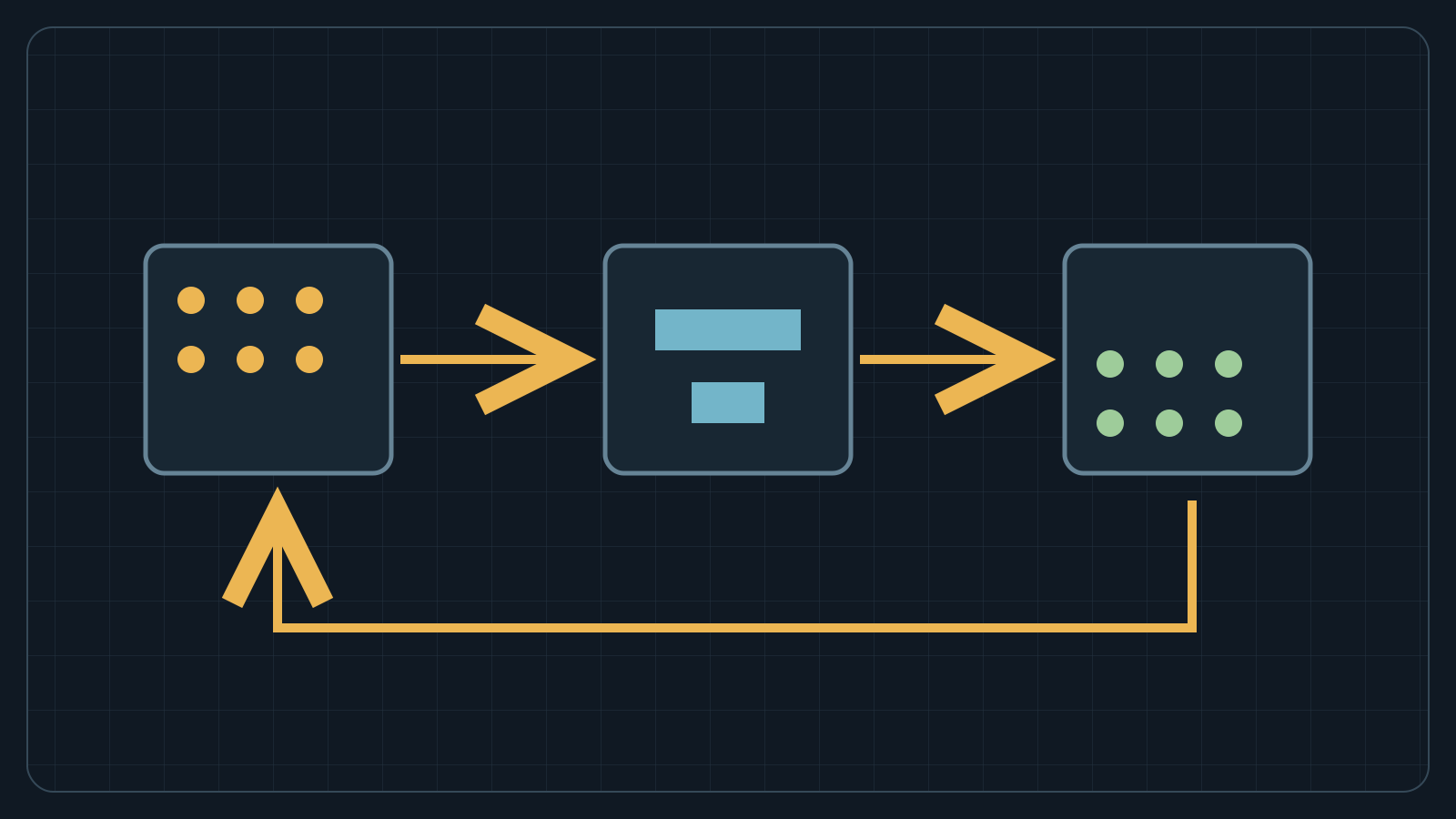
Conveyor Portals solve a geometry problem: two material routes need to cross, but a normal junction would mix them. Treat the portal as a transport boundary with a defined entrance and exit. The crossed route remains physically separate only when both portal directions and nearby cells are built correctly.
The official Research page currently lists Conveyor Portal at 750 Gold. That page is still being developed, so confirm the cost and prerequisite in the live technology tree before committing a long unlock route. The function of crossing lines without mixing is the durable planning reason to reserve space.
Follow the documented input and output rules
A portal moves a conveyor stream across another line while preserving separation. It does not sort an already mixed input. Feed one identified material into the entrance during commissioning and collect it in an empty pocket at the exit. Test the crossed line independently before running both together.
Direction and clearance matter at both endpoints. If the destination is full, the entrance can appear broken even when the portal link is valid. Trace material from the source to the entrance, through the pair, and from the exit to storage as three separate boundaries.
Build a serviceable layout
Reserve a rectangular service zone around both ends and keep the crossed route visible. Add a shutoff before each line so one can be tested while the other remains empty. Avoid placing a second portal pair so close that entrances or exits become visually ambiguous.
Use portals where they remove a real crossing constraint, not as default transport for every short gap. Conventional conveyors are easier to observe and repair. A portal earns its space when it preserves two readable modules and prevents a mixed junction that would otherwise require complex filtering.
Diagnose the first failed boundary
If material reaches the entrance and stops, inspect pairing, direction, and output capacity. Empty the destination and try a single sample. If material exits but joins the crossed line, inspect the cells immediately after the portal; the portal may have worked while the ordinary output geometry recombined the streams.
If an older world contains a portal that remains stuck, confirm v0.5.6 and test after a save and reload. Update #3 includes a stuck-portal fix. Preserve the original world before removing the pair, and rebuild only after the current-version test shows the problem persists.
Apply the v0.5.6 version notes
Version 0.5.6 fixes Conveyor Portals becoming stuck. Remove workaround bypasses one at a time and observe the route through a restart. A repaired transport path may expose a downstream buffer that had filled while the portal was inactive.
Research data can change during Early Access, and the official Research page is marked as work in progress. Treat 750 Gold as the checked current table value, show the date with this article, and verify the in-game tree after any progression update.
Field facts
| Purpose | Cross production lines without mixing |
|---|---|
| Current listed research cost | 750 Gold |
| v0.5.6 fix | Portals becoming stuck |
| Commissioning sample | One labeled material per route |
Troubleshooting
- Material stops at a portal entrance.
Clear the exit and destination, confirm direction and pairing, then retry one sample on v0.5.6.
- The two lines mix after the crossing.
Inspect ordinary conveyor cells immediately after the portal; keep each exit on a separate route.
- An old portal remains stuck after updating.
Preserve the save, reload on v0.5.6, test an empty destination, and rebuild the pair only if the fault remains.
Frequently asked questions
What does a Conveyor Portal do?
It lets one production route cross another without mixing their material streams.
How much does Conveyor Portal research cost?
The checked official Research table lists 750 Gold; confirm the live Early Access tree because the page is still work in progress.
Was the stuck Conveyor Portal bug fixed?
Update #3 states that v0.5.6 fixes Conveyor Portals becoming stuck.
Can a Conveyor Portal sort mixed material?
It should be used to preserve separate routes, not to separate an input that is already mixed.
Sources
Official references used for this field guide.